
How to Document Storm Damage for Insurance (First 48 Hours)

A step-by-step guide for DFW homeowners on documenting hail and wind damage correctly in the first 48 hours after a storm, before filing an insurance claim.
How to Document Storm Damage for Insurance (First 48 Hours)
If a storm just came through your part of Dallas-Fort Worth, you're probably dealing with two things at once: figuring out if your roof took damage, and figuring out what to do about it. What you do in the first 48 hours matters more than most homeowners realize. Insurance claims aren't decided on how bad the storm was — they're decided on what got documented.
Here's what to do, in order.
1. Stay off the roof
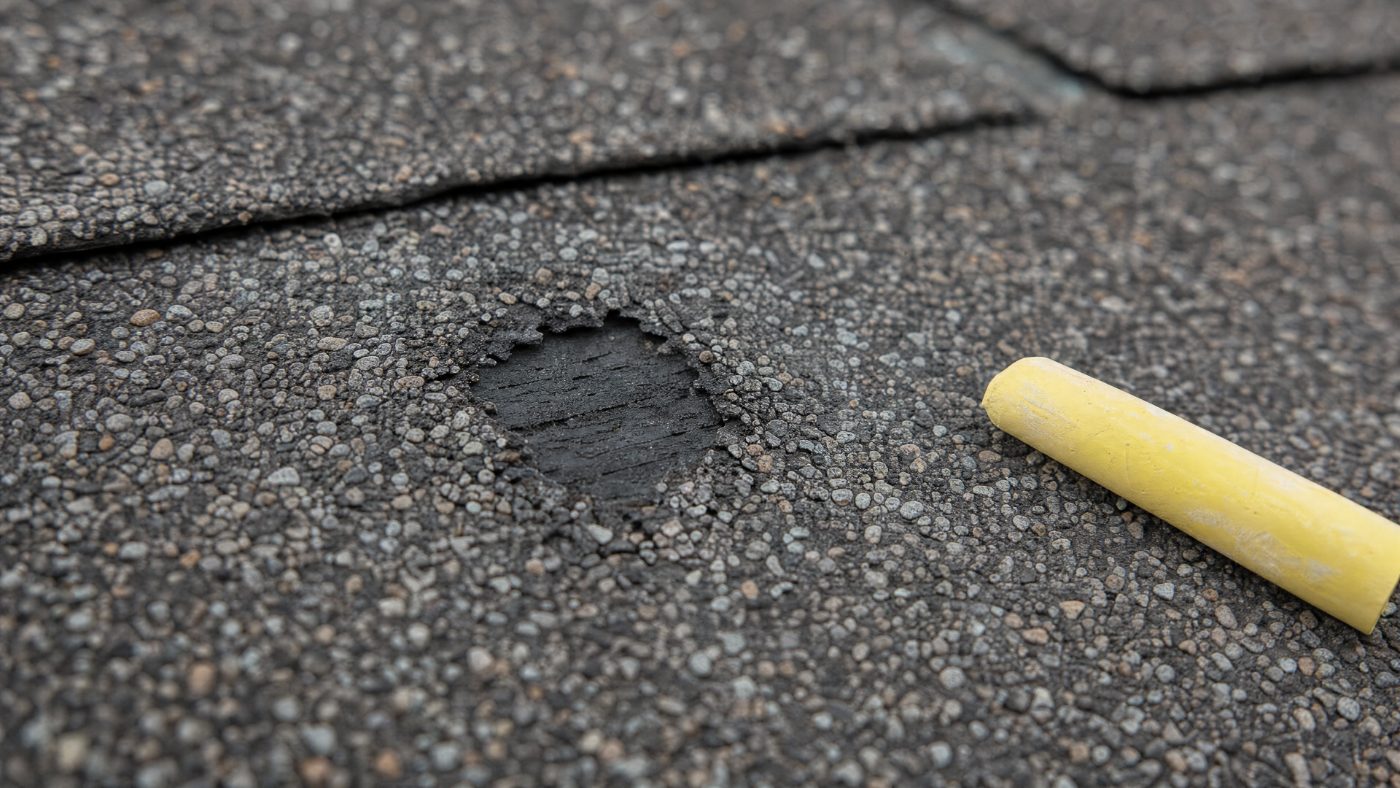
You don't need to climb up there, and you shouldn't. Hail damage especially can be hard to see from the ground, and it's easy to make things worse — or hurt yourself — poking around on a roof you don't inspect for a living. Walk your property line instead and look at what you can see safely: gutters, downspouts, siding, window screens, AC unit fins, fence panels, and any dented or dinged metal (mailbox, vents, grill covers). Hail dents on soft metal are a strong sign your roof took hits too.
2. Photograph everything, right away
Before you touch anything or let anyone else touch anything, take photos and video of:
- Any visible roof damage from ground level (zoom in with your phone)
- Damaged gutters, downspouts, and gutter screens
- Dented AC unit, mailbox, fence, or other exposed metal
- Any leaks, water stains, or ceiling spots inside the house
- Debris in the yard (broken shingles, granules in gutters or on the driveway, hail stones if it's still fresh)
- Wide shots of the whole house from each side, not just close-ups
Timestamp matters. Most phones geotag and timestamp photos automatically — don't turn that off. If you can, jot down the date and any weather report you can find for that day (local news, NWS storm reports).
3. Don't sign anything same-day
After a big storm, it's normal to have contractors knocking on doors within hours. Some are legitimate local companies checking in on the neighborhood. Some are not. Either way — don't sign a contract, an "authorization to inspect," or anything with fine print the same day someone knocks, no matter how much urgency they create. A contract signed under pressure, before you've had your own documentation, puts you at a disadvantage before your claim even starts.
It's fine to have someone give you a preliminary look. It's not fine to let that turn into a signature before you've had a chance to think it through.
4. Get your own documented inspection before the adjuster comes
Insurance companies send their own adjuster to evaluate damage — that's expected. What a lot of homeowners don't realize is that adjusters are often working through a lot of houses in a short window after a regional storm, and their inspection can miss things: flashing around chimneys and vents, damage low on the roof plane, or granule loss that's hard to see from the ground or from a quick walk of the roof.
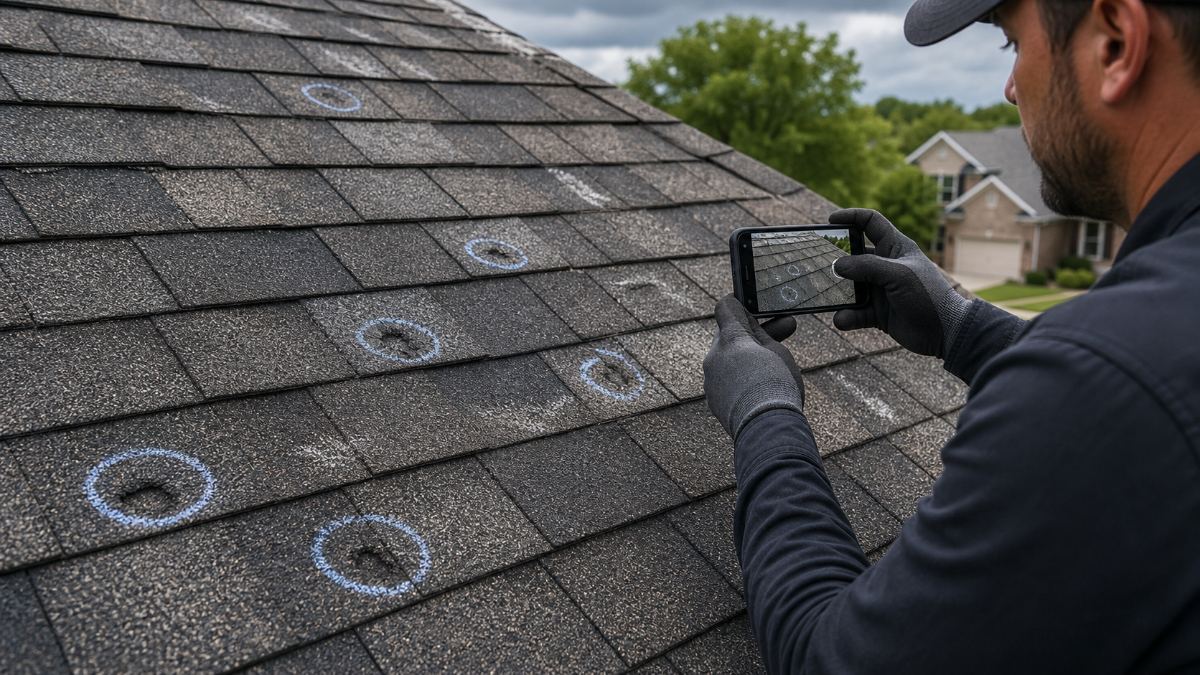
Having your own photo-documented inspection done first — before or alongside the adjuster's visit — gives you a record to compare against. If the adjuster's report undercounts the damage, you have something to point to.

5. Know what an adjuster is actually looking for
Adjusters are checking for:
- Number and pattern of hail hits per roofing "test square" (a sample area, usually 10x10 ft)
- Whether damage is "cosmetic" or "functional" (functional damage affects how the roof sheds water; cosmetic doesn't, in the insurer's view)
- Soft metal impact marks (vents, flashing, gutters, AC fins) as corroborating evidence
- Age and existing condition of the roof, since pre-existing wear can be used to reduce a payout
- Slope-by-slope damage, since wind and hail don't always hit every side of a roof evenly
6. Common reasons claims get denied or underpaid
- Damage called "cosmetic only." This is the single biggest dispute point on hail claims. If your roof's mat or shingle integrity is affected, it's not cosmetic — but the initial inspection may not have caught that.
- Missed areas. Flashing, vents, pipe boots, and gutters get skipped in a fast inspection, but they're common failure points.
- Not enough documentation of pre-storm condition. If you don't have photos or records from before the storm, insurers can (and sometimes do) argue the damage was already there.
- Filing too late. Most policies have a window to report damage. Waiting weeks or months to file gives the insurer room to question whether the damage is storm-related at all.
- Repairs started before documentation. If you patch a leak or replace shingles before the damage is fully documented, you lose the ability to show the original extent of it.
7. What to keep in a claim file
Insurance claims move faster and go smoother when everything is organized in one place from the start. Keep a single folder — physical or digital — with:
- All photos and videos, ideally still carrying their original timestamp/metadata
- A written log of dates: when the storm hit, when you first noticed damage, when you contacted your insurer, when any inspection happened
- Copies of any inspection reports, whether from your insurer's adjuster or an independent inspection
- Your policy number and a copy of your policy's relevant coverage section
- Names, dates, and notes from every phone call with your insurance company — who you spoke to and what was said
If a claim gets disputed or underpaid, this file is what makes the appeal possible. Recreating it after the fact, from memory, is much harder than keeping it as you go.
8. If your claim gets denied or underpaid
You have options beyond accepting the first number. You can request a re-inspection, submit supplemental documentation (including an independent second opinion — see our guide on when to get a second opinion on your roof inspection), or, in some cases, file a complaint with the Texas Department of Insurance if you believe your claim was handled in bad faith. None of these require you to have a contractor "fight" the insurer for you — they require documentation that supports a different conclusion than the one the insurer reached.
What to do next
Document first. Decide second. If you want a second set of eyes before you file — or before you accept an adjuster's scope of damage — that's exactly what a documented inspection is for.
Built By Ward will come out, inspect the roof (the founder does every inspection personally), photograph everything, and give you a written, line-itemized report you can use for your claim — whether or not you end up hiring us for the repair. No pressure, no same-day signature required.
Request a documented inspection: email roofing@builtbyward.com.
Want a documented inspection or a straight scope of work?
Email roofing@builtbyward.comPublished 2026-07-03 · Built By Ward Contracting, Dallas-Fort Worth, TX